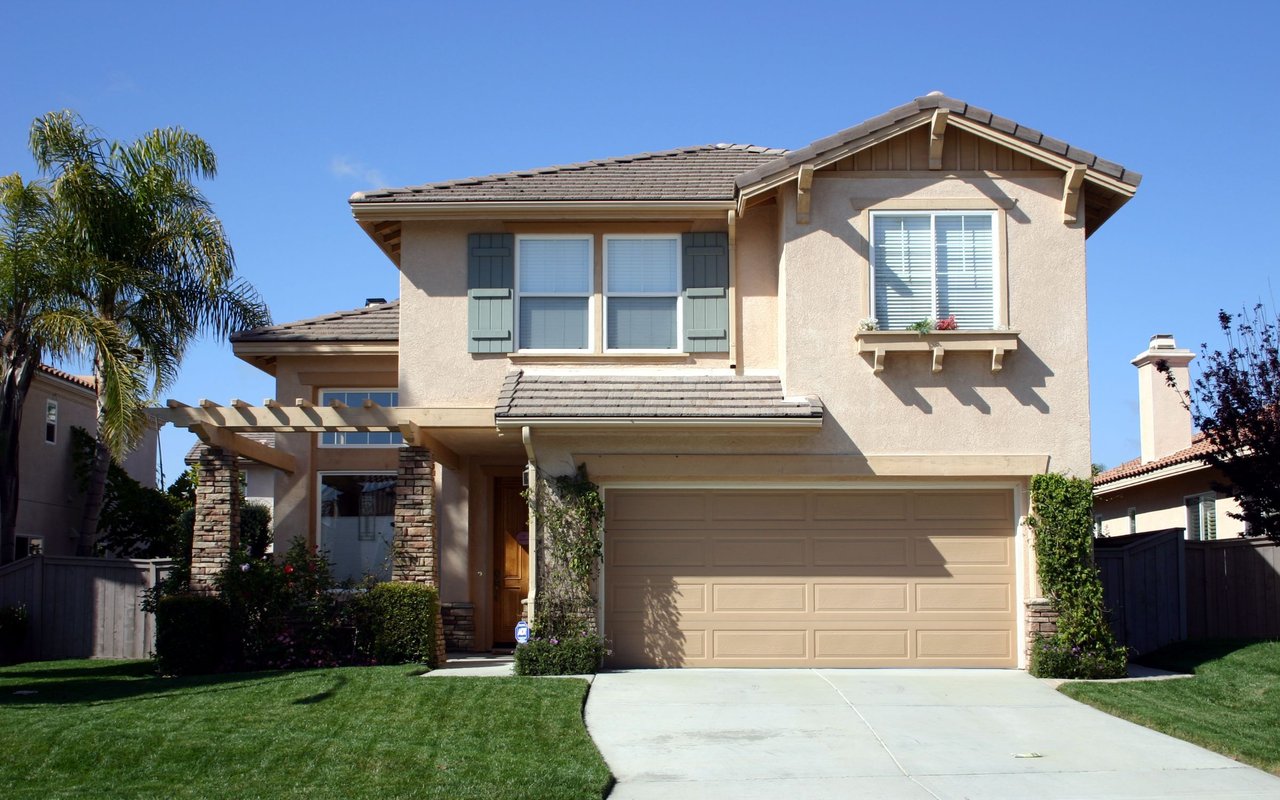
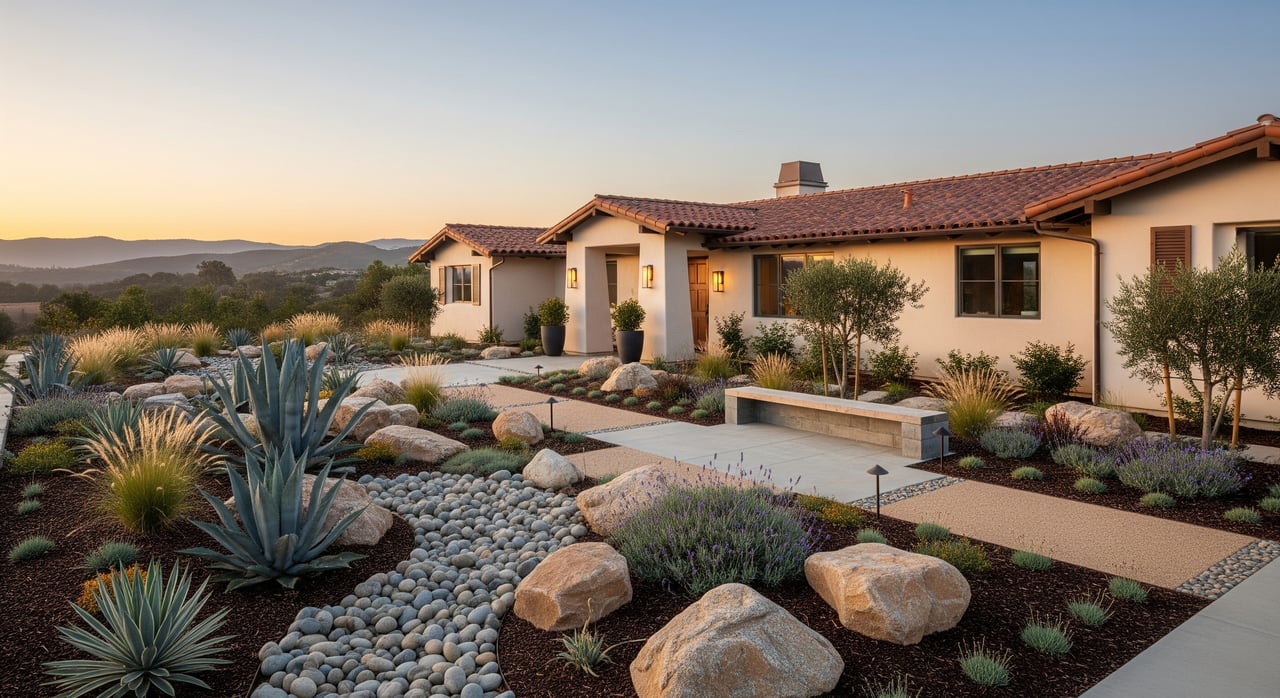
Is your front lawn drinking more water than your buyers want to pay for? In Vista, where summers are hot and dry, a drought‑smart front yard can lower ongoing costs, look beautiful in photos, and help your home stand out online. You want curb appeal that feels intentional, low maintenance, and marketable without taking on a long, messy project. In this guide, you’ll learn what to plant, what to replace, how to upgrade irrigation, and where to check for local rebates and approvals. Let’s dive in.
Why drought‑smart curb appeal matters in Vista
Vista has a Mediterranean climate with long dry periods and mild, wetter winters. Local water agencies have promoted turf replacement and efficient irrigation for years, and buyers often see low‑water landscapes as a plus. Reducing water use can also keep future bills more predictable.
Your goal is a front yard that looks polished in listing photos, is easy to maintain, and does not require a costly overhaul. Thoughtful plant selection, clean hardscape lines, and an efficient irrigation update can deliver that result on a manageable timeline.
Make a simple plan first
Start by mapping your site conditions. Note full sun versus filtered shade, wind exposure, and drainage. Vista’s soils tend to be sandy to loamy, so plan for good drainage and consider soil amendments for new plantings.
Check your HOA guidelines for front‑yard materials, plant types, and design rules. For significant hardscape changes like retaining walls, driveways, or grading, confirm permit requirements with the City of Vista Planning & Building Department.
If you are considering rebates, many turf conversion programs require pre‑approval. Do not remove existing turf until you confirm eligibility and photo documentation rules with your water provider.
Choose a Vista‑ready plant palette
Favor California natives and Mediterranean‑climate plants that need little water once established. Use layering to create depth for photos: groundcover at the front, mid‑height color, and structural shrubs or small trees toward the back. Repeat species and colors for a cohesive look.
Native structural anchors
- Manzanita (Arctostaphylos spp.) for sculptural form and year‑round interest.
- Toyon (Heteromeles arbutifolia) for seasonal berries and a strong backbone.
- Coast live oak or smaller native shrubs where space allows.
Color and pollinator shrubs
- Ceanothus (California lilac) for spring blue blooms.
- Cleveland sage (Salvia clevelandii) and other native sages for scent and color.
- California fuchsia (Epilobium canum) for late‑season flowers.
- California buckwheat (Eriogonum fasciculatum) for long‑lasting clusters.
Grasses and groundcovers
- Deer grass (Muhlenbergia rigens) as a bold, native ornamental grass.
- Low native groundcovers such as Lotus or Nama species to knit spaces together.
Succulents and Mediterranean accents
- Agave, aloe, euphorbia, and aeonium for sculptural shapes.
- Rosemary and lavender for fragrance, pollinators, and low water needs.
Plant in groups of three to five for visual impact. Select plants with staggered bloom times so you have interest from spring through fall. To speed up the look in photos, use larger container sizes at install.
Smarter lawn alternatives buyers like
You can replace water‑thirsty turf with combinations that still feel welcoming:
- Decomposed granite (DG) with planted pockets for texture and flow.
- Permeable pavers or stepping‑stone paths lined with low plantings.
- A native meadow or mixed groundcovers for a soft, natural look.
- A small, high‑efficiency turf zone paired with drought‑tolerant areas elsewhere.
- Low‑pile artificial turf for a consistent green patch if desired. Disclose materials to buyers.
Design for usability. A defined sitting nook or a clean path to the door adds lifestyle appeal while keeping water use low.
Irrigation upgrades that pay off
An efficient system is a buyer‑friendly feature and a photo‑ready insurance policy. Focus on these steps:
- Replace spray heads in planting areas with drip irrigation. Group plants by water needs so each zone can run efficiently.
- Install a weather‑based or Wi‑Fi smart controller to adjust schedules based on local weather.
- Use pressure regulation and pressure‑compensating drip lines to reduce waste.
- Check for leaks, broken heads, and overspray before photos and showings.
- Mulch tree and shrub beds to hold moisture and suppress weeds.
A quick seller checklist:
- Convert lawn sprinkler zones to drip or split them into smaller, manageable zones.
- Label the controller and leave simple operating notes for buyers.
- If you have it, provide a basic irrigation map and recent water usage.
Hardscape accents that photograph well
Clean, restrained hardscape reads beautifully online and signals low maintenance:
- DG paths or small patios with crisp metal or stone edging.
- Permeable pavers in neutral tones that echo your facade.
- Boulders and grouped rocks as sculptural focal points among plantings.
- Low masonry or gabion planter walls to define areas and add height.
- Tight edging and clean mulch lines for a neat, finished look.
Lighting and accessories elevate the feel:
- Low‑voltage LED path lights to safely guide the eye at dusk.
- One statement container by the entry planted with a bold succulent or native shrub.
- Simple, uncluttered outdoor furniture to suggest usable space.
Keep fire safety in mind
Parts of San Diego County include wildland‑urban interface zones. Choose low‑flammability plants near structures, keep dead material cleared, and maintain required defensible space. Rock mulch and irrigated planting near the house can help reduce risk. Follow local fire guidance for spacing and pruning.
Mood board looks that sell
Use these ready‑to‑go concepts to guide selections and photos.
Coastal Native Cottage
- Palette: Ceanothus, Cleveland sage, deer grass, low native groundcover, and seasonal California poppies.
- Hardscape: Warm DG paths, native‑stone borders, and a simple wooden planter or bench.
- Photo tip: Shoot late afternoon for warm light and repeat a flower color near the front door.
Modern Mediterranean Minimalist
- Palette: Rosemary, lavender, preserved ornamental grasses, and sculptural agave or aloe.
- Hardscape: Linear pavers over gravel, permeable tiles, and a low neutral stucco wall.
- Photo tip: Use morning or golden hour light to emphasize clean geometry and shadows.
Succulent Rock Garden & Accent Trees
- Palette: Mixed succulents like aeoniums, agave, echeveria, with a manzanita or toyon as an accent tree.
- Hardscape: Grouped boulders, coarse gravel mulch, and one vibrant container at the entry.
- Photo tip: Take low‑angle shots to highlight structure and leaf contrast.
General photo prep for all looks: weed, edge, hide hoses and tools, and water lightly beforehand so foliage looks fresh without visible puddles. Capture a wide shot, a medium shot showing the path and entry, and a close‑up for texture.
Rebates, permits, and resources
Programs and amounts change, so confirm specifics with local agencies before you start. Common offerings include turf removal or landscape conversion rebates, weather‑based controller rebates, and assistance for high‑efficiency nozzles or drip conversions. Rain barrel or cistern rebates may be available at times.
Where to check in Vista and greater San Diego County:
- Vista Irrigation District for customer eligibility and rebate administration.
- San Diego County Water Authority for regional programs and links to local offerings.
- City of Vista Planning & Building Department for permits on retaining walls, driveways, or changes to impermeable surfaces.
- Nonprofit resources like the California Native Plant Society and UC Cooperative Extension for plant lists, calendars, and soil guidance.
Application tips: many turf programs require pre‑approval or an inspection. Keep before and after photos, contractor receipts, and a plan showing square footage converted. Work with licensed contractors who understand local rebate paperwork.
Three project scopes and timelines
Choose a path that fits your timeline and budget while hitting the photo‑ready goal.
- Quick refresh, days to a week: Remove dead turf patches, install one statement container, tidy beds, fix broken sprinkler heads, and add fresh mulch.
- Mid‑range conversion, 1 to 3 weeks: Remove turf, install drip irrigation, add a DG path, plant 6 to 12 shrubs and 3 to 5 specimen succulents or small trees. Allow time for rebate pre‑approval.
- Full makeover, 2 to 8 weeks: Comprehensive design with permeable pavers, planter walls, larger specimen plantings, and a smart controller with hydrozoned drip. Confirm any permits and rebate steps before work starts.
Prep for showings and photos
Aim for a finished, intentional look that signals low upkeep:
- Edge all paths and beds and top off mulch evenly.
- Prune lightly for shape and clear sightlines to the front door.
- Set irrigation to a clean, reliable schedule and leave labeled instructions for buyers.
- Stage one inviting outdoor perch if space allows.
Next steps in Vista
- Contact your local water agency to confirm current rebates and pre‑approval requirements.
- Check City of Vista permitting for any planned hardscape or grading.
- Consult a landscape pro with experience in Southern California natives and rebate paperwork.
- Gather before photos, a simple sketch, and planned square footage to convert.
- Schedule photography after beds are cleaned, irrigation is tuned, and your focal container is placed.
Ready to maximize your sale?
If you want a hands‑on partner to plan, coordinate vendors, and stage for impact, our team can help you execute a drought‑smart refresh that photographs beautifully and resonates with Vista buyers. Request a complimentary home valuation and a tailored prep plan with The Davidson Realty.
FAQs
Will a drought‑smart yard hurt resale in Vista?
- A well‑designed low‑water landscape can boost curb appeal and lower expected operating costs for buyers when it presents as cohesive and intentional.
How much maintenance compared to grass?
- You avoid weekly mowing and high irrigation, but should plan for seasonal pruning, weed control, and occasional mulching once plants are established.
How long until the front yard looks mature?
- You should see a strong improvement within one growing season with container‑sized shrubs, and many natives establish within one to three seasons.
Do turf replacement rebates require pre‑approval?
- Many programs do, and acting before you apply can make you ineligible, so confirm rules and photo requirements before removing turf.
What water savings can I expect after turf removal?
- Savings vary with design and baseline use; replacing turf and converting to drip typically reduces consumption, which your water agency can help estimate.
Are drought‑tolerant plants safe near the house?
- Some succulents and well‑maintained natives are lower risk; follow local fire guidance on spacing, pruning, and using rock mulch near structures.