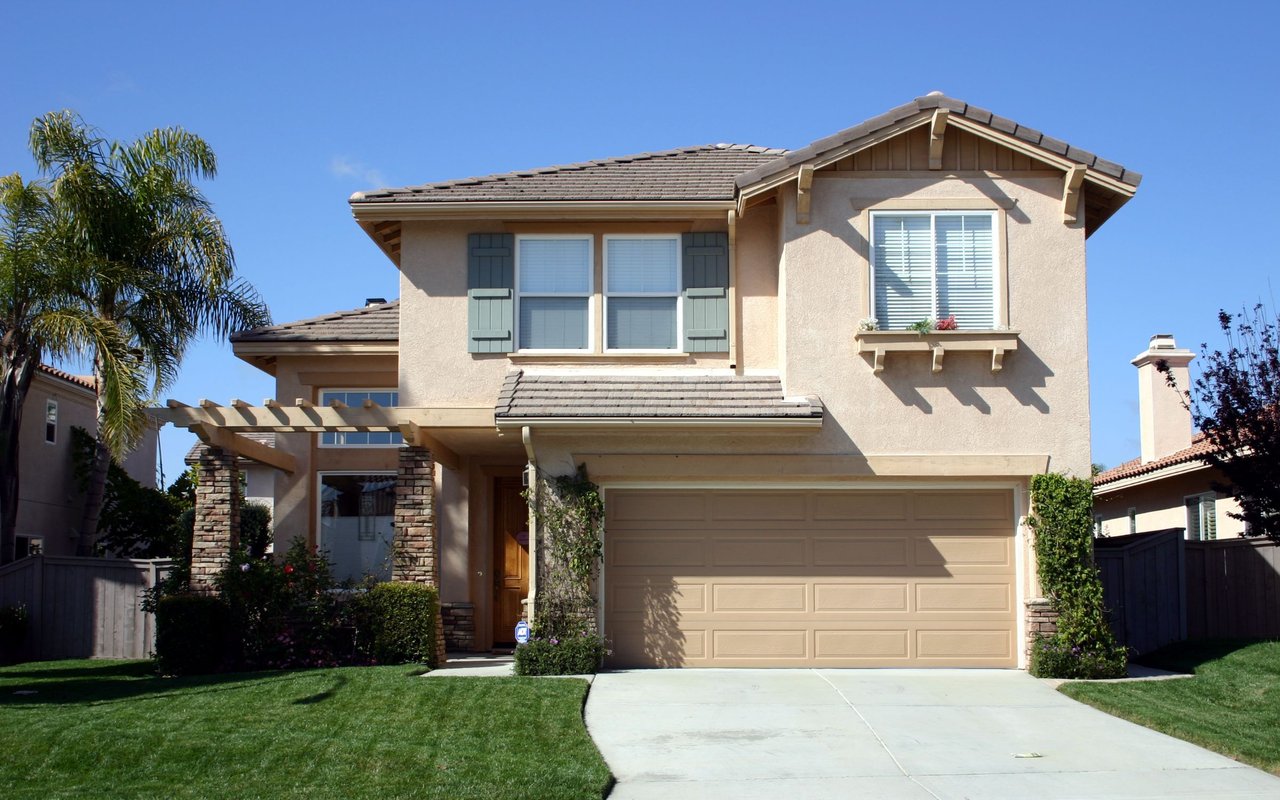
Drive from the town center up toward Double Peak and you'll pass through gate after gate in the space of a few minutes. Westridge. Then Summit. Then Saverne, Springfield, Palisades, Belmont, Altaire. Keep going and you'll find Atherton, Calistoga, Luminara, Woodley's Glen, and a gated enclave at the north end called The Estates. San Elijo Hills has been built out since 2002 as roughly two dozen separate walled communities stitched into one hillside, and that matters more than most buyers realize when they're comparing two listings side by side.
Here's the friction that catches people off guard. Two homes can list at the same price, sit a quarter mile apart, and still cost noticeably different amounts every month once you account for what each one actually owes. Not because of taxes on the home's value. Because of which village it sits in.
One CFD, Many Bills Inside It
Most San Elijo Hills homes are subject to a Community Facilities District, commonly called Mello-Roos, administered through the City of San Marcos. A CFD is how California cities finance streets, sewers, and other infrastructure in newly built areas without touching the base 1 percent property tax rate set by Proposition 13. The city sells bonds to build the improvements up front, then property owners inside the district repay that debt through an annual special tax billed alongside the regular tax bill. The San Diego County Assessor's office explains the mechanics here, and the City of San Marcos maintains its own CFD and Mello-Roos page for residents who want the underlying documents.
What most buyers assume is that a single CFD means a single rate. It doesn't work that way here. Large master-planned CFDs are almost always subdivided into improvement areas, and each village inside San Elijo Hills can sit in a different one, with its own bond schedule, its own payoff date, and its own tax amount per parcel.
That isn't a theoretical distinction. It already happened once, on the record.
The Letter That Only Went to Three Neighborhoods
San Elijo Life reports that when the City of San Marcos refinanced bonds within the San Elijo Hills CFD, the reduced rate didn't apply community-wide. It applied to specific improvement areas, and the documented beneficiaries were Mariners Landing, Meridian, and Creek Side Cottages. Other villages inside the same overall district kept their prior schedule. The term of the CFD stayed the same either way, running through 2036, but the annual bill two neighbors paid changed by neighborhood, not by house.
If you've only ever seen "San Elijo Hills Mello-Roos" quoted as one number, that number was never describing the whole community. It was describing whichever village the person quoting it happened to look up.
That single refinancing event is the clearest proof available that this community doesn't have one Mello-Roos rate. It has many among the parcels subject to the CFD, and which one applies, if any, to a given listing depends on which gate you drive through.
What One Documented Village Actually Pays
Public listing data for the Westridge community, a Pulte-built townhome neighborhood of 123 residences just north of San Elijo Road, gives a concrete look at what one village's carrying costs look like stacked together. Westridge homes carry a monthly HOA dues of roughly $300, a base property tax rate around 1.09 percent of assessed value, and an additional Mello-Roos special tax of approximately $1,600 per year on top of that.
Run the math on a $900,000 Westridge home and the base tax alone runs close to $9,810 a year. Add the $1,600 Mello-Roos and the $3,600 in HOA dues, and the all-in annual carrying cost before insurance or utilities lands over $15,000, a figure no single "median home price" ever captures.
Now picture a second home, same $900,000 price, sitting in one of the villages that benefited from the refinancing, or one that was never part of the higher-rate schedule to begin with. The HOA dues will be different because it's a different association with different amenities. The Mello-Roos line will be different because it's a different improvement area. The buyer comparing both homes on price alone is comparing the wrong number.
| Cost component | What varies | Why it varies |
|---|---|---|
| HOA dues | By village | Each of the ~24 communities has its own association, amenities, and reserve schedule |
| Mello-Roos special tax | By CFD improvement area | Bonds were issued and later refinanced separately by sub-area, not community-wide |
| Base property tax rate | Roughly consistent (~1.09%) | Set by county formula under Prop 13, less prone to variation than the two lines above |
What to Ask Before You Compare Two Listings
If you're evaluating homes across San Elijo Hills rather than within a single village, price per square foot tells you less than it would in a neighborhood with one HOA and one flat tax rate. Before treating two listings as apples to apples, ask for three things from the listing agent or the seller directly.
- The name of the HOA and the current monthly or quarterly dues, in writing, not from memory
- The specific CFD improvement area the parcel sits in, along with the current annual Mello-Roos amount shown on the most recent property tax bill
- Whether that CFD has been refinanced or reduced since the original bond issue, and if so, when the current schedule runs through
Merced County explains that sellers in a Mello-Roos district have a legal obligation to make a good faith effort to provide a Notice of Special Tax to a buyer before close, so this isn't information you're asking someone to dig up out of courtesy. It's on the way to you regardless. Asking early just means you're comparing real numbers instead of assumed ones while you're still deciding which homes are worth touring.
Where the Market Sits Right Now
As of June 2026, the median home price across San Elijo Hills stood at $1,450,000, with homes typically spending around a month on the market before going into contract, a pace still noticeably faster than the national average. That figure blends detached houses on quarter-acre lots in The Estates with attached townhomes in Westridge and Springfield, which is another reason a single median doesn't tell you much about what any specific address will actually cost to carry. The price gets you in the door. The village determines what you pay after.
Frequently Asked Questions
Does every home in San Elijo Hills pay Mello-Roos? Most do, since the community was built after the Mello-Roos Act made CFD financing common for new development, but the amount is set by improvement area, not by the community as a whole. A home built outside the original CFD boundary, or on a large unincorporated parcel at the edge of the community, may carry no Mello-Roos at all, so this is always worth confirming rather than assuming.
Can I look up a specific parcel's Mello-Roos amount before making an offer? Yes. The county's special assessments lookup, linked from the Assessor's Mello-Roos page, lets you search by Secured Property Tax Parcel Number to see the exact CFD, bond details, and current special tax tied to that parcel.
Is Mello-Roos tax deductible? Confirm your specific situation with a tax professional rather than relying on a general rule, since individual circumstances vary.
Does Mello-Roos ever end? Yes. It runs until the bonds are paid off or a maximum term is reached, whichever comes first. In San Elijo Hills, the CFD term runs through 2036 even where rates were reduced through refinancing, so buyers should ask how many years remain rather than assuming the tax is permanent.
If you're comparing homes across San Elijo Hills and want the village-by-village breakdown before you tour anything, that's exactly the kind of homework The Davidson Realty does before a client ever writes an offer. Request a complimentary home valuation and concierge consultation and we'll walk you through what each specific address actually costs to carry, not just what it costs to buy.
This article is general information, not legal, tax or financial advice. Consult a qualified professional about your situation.