Open five real estate sites and search the same city, San Marcos, California, and you will get five different prices for what looks like one simple number. One site says the median just crossed $945,000. Another says $925,000. A third says $820,000. A fourth says $887,217 in one place on its own page and $866,540 in another. If you are trying to decide whether San Marcos is heating up, cooling off, or holding steady before you compare it to Vista, Carlsbad, or Oceanside, none of these numbers tell you what you think they tell you, and the reason has nothing to do with bad data.
San Marcos is, at this exact moment, building two different cities inside one zip code. Understanding that split is the only way to make sense of the price spread, and it changes how you should think about buying here for the next several years.
Same City, Five Different Answers
Here is the spread as of mid to late 2026. Redfin's citywide page shows a median sale price of $925,000 for March 2026, up 2.2% from a year earlier. On the same page, Redfin's separate "average house price" metric shows $860,000, down nearly 10% year over year. That is one platform, two calculations, two directions. Zillow's home value index put San Marcos at $912,665 in its June 2026 update, down 3.1% over the past year. Movoto's August 2026 figure for list prices was $820,000, down 4% from the prior month. A market report on the 92078 zip code, which covers North City and several surrounding tracts, found a $945,000 median over a 30-day window in late spring 2026, up 1.6% year over year.
None of these sources disagree because someone made an error. They disagree because "San Marcos" no longer describes one housing product. It describes at least two, and the ratio between them shifts every month depending on what closes escrow.
The Reason: San Marcos Is Building Two Cities at Once
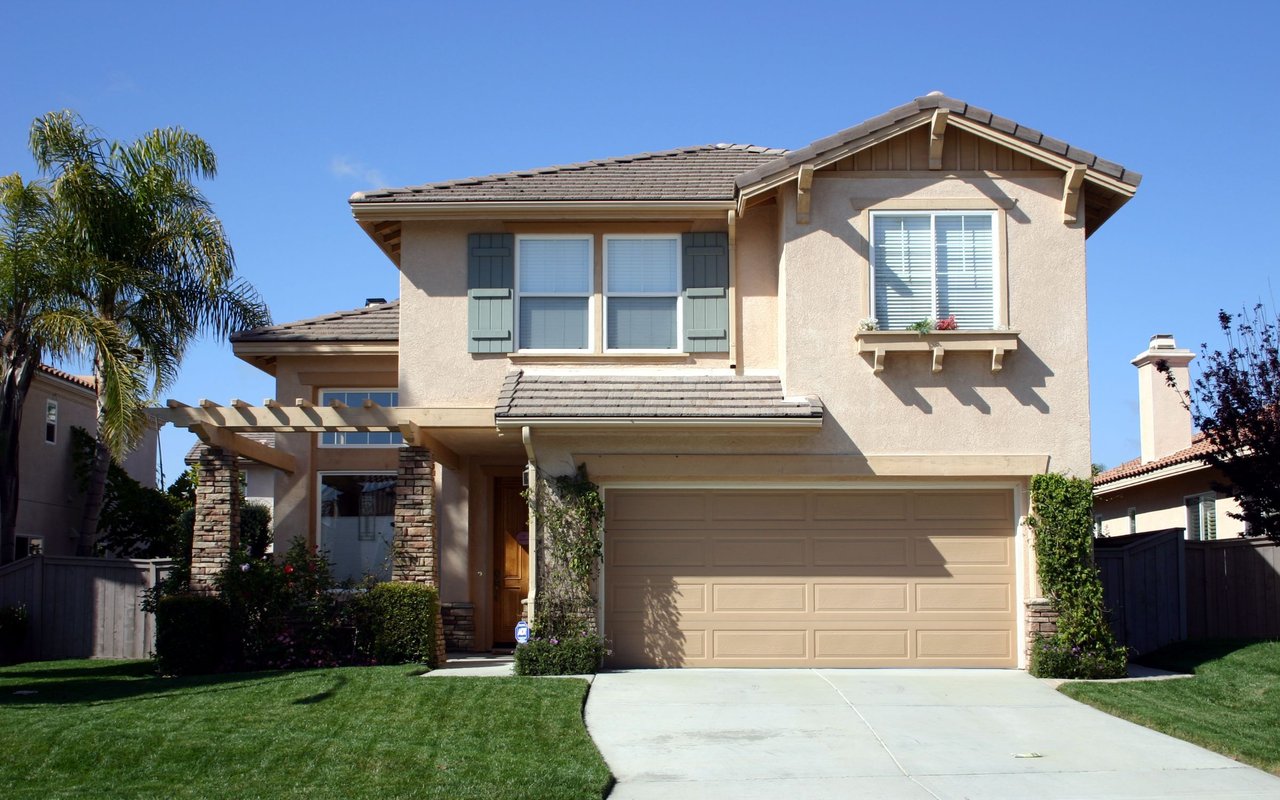
The older San Marcos is the one most buyers picture: San Elijo Hills on its hilltop, Santa Fe Hills with its parks and family tracts, Lake San Marcos with its golf and water frontage, Twin Oaks Valley with its larger lots. These are established, mostly detached, single-family neighborhoods built out over the past two to three decades. San Elijo Hills in particular has become known for homes that routinely trade in the $1 million to $2 million range, reflecting its hilltop views, its Town Center, and its 3,000-plus homes built starting in 2002.
The newer San Marcos is North City, a 200-acre master plan next to Cal State San Marcos that did not exist as a downtown until city leaders and a developer created one starting in 2004. A Voice of San Diego report from April 2026 pegs the full build-out at $2 billion and 3,400 new homes, with roughly 400 of those units deed-restricted as affordable housing. Mayor Rebecca Jones, who has led the city since 2018, has pointed to North City as the clearest example of what happens when a city plans ahead of state housing mandates rather than reacting to them project by project.
The newest phase of that plan, The Hill District, is where the price story gets concrete. Shea Homes and Lennar are both actively selling attached product there right now, and the pricing is nothing like San Elijo Hills. ReVel, a 91-home Shea Homes community of two-story townhomes between 1,292 and 1,661 square feet, is priced between $735,000 and $828,000. Element, a 125-home Lennar community of similar attached townhomes, runs $696,000 to $781,000. Radius, also by Lennar, spans $850,000 to $970,000. Shea's Amplitude and Peak59 collections add three-story attached townhomes and detached condos to the same corridor, all within walking distance of CSUSM, the Sprinter line, and North City's restaurants and co-working space.
Put those two housing stocks side by side and the composition problem becomes obvious.
| Area | Typical Product | 2026 Price Range | Status |
|---|---|---|---|
| Element & ReVel, The Hill District | Attached townhomes, 1,292 to 1,895 sq ft | $696,000 to $828,000 | Actively selling, hundreds of units |
| Radius, The Hill District | Attached homes | $850,000 to $970,000 | Actively selling |
| San Elijo Hills | Detached single-family | Roughly $1 million to $2 million | Built out mostly 2002 to 2015, resale market |
| Santa Fe Hills, Lake San Marcos, Twin Oaks Valley | Detached single-family, resale | Varies widely by lot, lake, and golf proximity | Established, largely pre-2015 |
When a month's closings lean toward Hill District townhomes, the citywide median drops, because a $735,000 attached home and a $970,000 attached home are both, statistically, cheaper than the $1.3 million detached resale that might have closed instead. When a month's closings lean toward San Elijo Hills or Lake San Marcos, the median climbs, and it can climb sharply, because those homes are larger, older, and sit on land that isn't being replicated anywhere in the city right now. Neither shift means home values are actually rising or falling that month. It means the mix of what sold changed.
What This Means If You're Comparing San Marcos to Somewhere Else
If you are cross-shopping San Marcos against Vista or Carlsbad using a single median number, you are comparing a moving target to a fixed one. Vista and Carlsbad are not adding a 3,400-home master plan next to a university campus this year. San Marcos is, and it will keep adding units to that specific corridor for as long as The Hill District's remaining phases take to sell out. That means the citywide median here is going to keep swinging in ways that have nothing to do with whether San Marcos itself is a stronger or weaker place to buy.
The more useful comparison is product to product. If you want what North City offers, a walkable, newer, lower-maintenance home near a college campus and a rail stop, compare Element or ReVel's pricing to similar attached new construction in Carlsbad or Oceanside, not to a resale house in San Elijo Hills three miles away. If you want what San Elijo Hills or Lake San Marcos offer, land, views, an established HOA with a known track record, and often a lake or golf amenity, compare those against similarly positioned resale neighborhoods elsewhere in North County. Trying to average the two into one San Marcos number tells you less than either comparison would on its own.
The Part That Actually Changes Your Monthly Payment
There is a second layer here that matters more than the sale price alone. San Marcos has established Community Facilities Districts, commonly called Mello-Roos, to fund infrastructure in several of its newer tracts, including portions of San Elijo Hills. These assessments show up as a separate line on the property tax bill every year regardless of what the home last sold for, and they vary by tract rather than by city. Some newer North City communities market themselves specifically on having a lower tax rate than neighboring phases, which tells you the assessment structure is not uniform even within the same master plan. Two homes priced identically on paper can carry different true monthly costs once that assessment and any HOA dues are added in, so the sale price alone will not tell you what a specific address actually costs to own.
Frequently Asked Questions
Is San Marcos getting more expensive or less expensive right now? Both, depending on which segment you're watching. Established detached neighborhoods have shown median gains in some 2026 reporting windows, while the citywide blended number has shown declines in others, largely because more new attached construction is closing. Neither trend cancels the other out. They are describing different products.
Can I compare price per square foot between a Hill District townhome and a San Elijo Hills house? Not directly. Attached new construction, land under a detached resale, HOA structure, and CFD assessments all affect what that square footage actually costs you monthly, not just at closing.
How long will this dual market last? As long as North City's remaining phases take to sell through. With hundreds of units already listed across Element, ReVel, Radius, and neighboring collections, and more of the 3,400-home plan still to come, expect the citywide median to keep reflecting whatever mix closes each month for at least the next several years.
If you're trying to figure out what a specific San Marcos neighborhood, not the citywide average, actually costs to own today, that's the conversation worth having before you make an offer. The Davidson Realty works these micro-markets neighborhood by neighborhood, HOA by HOA, and can walk you through what a complimentary home valuation and concierge consultation would look like for your specific situation.